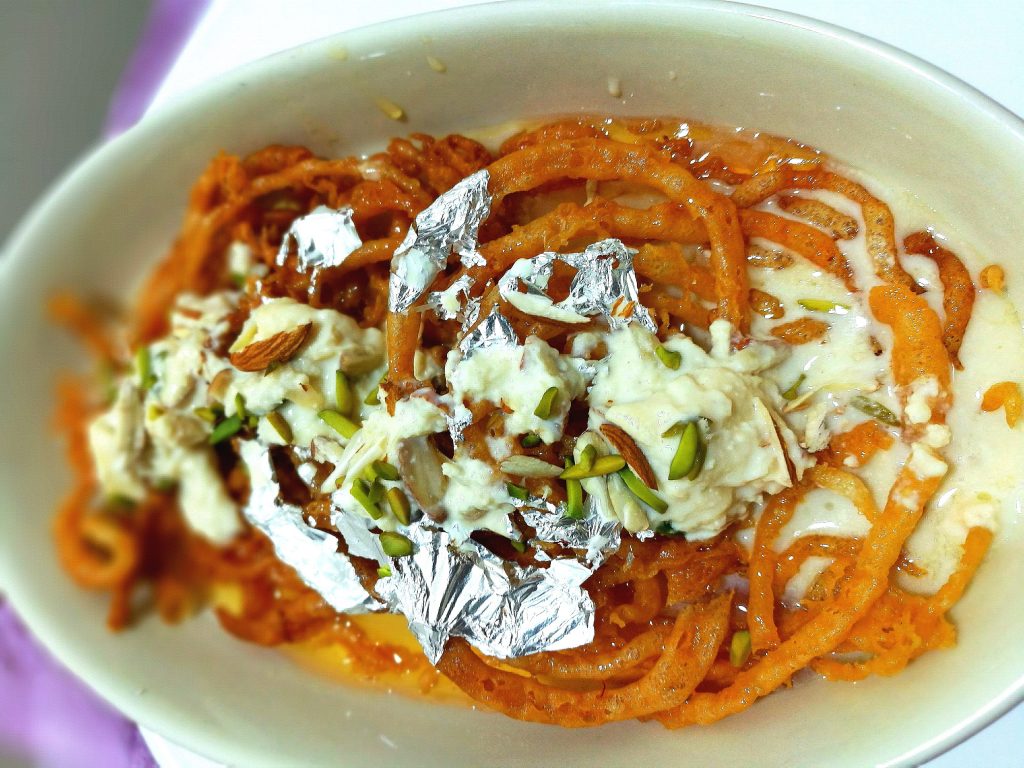
Jalebi Rabdi
Jalebi Rabdi: The Ultimate Indian Dessert That Perfectly Blends Crunch and Creaminess
Few Indian desserts can match the irresistible charm of Jalebi Rabdi. The combination of crispy, golden jalebis soaked in fragrant sugar syrup and rich, creamy rabdi creates a dessert experience that is both indulgent and unforgettable. Whether served at weddings, festive celebrations, street food stalls, or traditional sweet shops, Jalebi Rabdi remains one of India’s most loved dessert pairings.
The contrast between the warm, crunchy jalebi and the chilled, velvety rabdi makes every bite a delightful balance of textures and flavors. This timeless dessert has become synonymous with celebrations and continues to capture the hearts of sweet lovers across generations.
What Is Jalebi Rabdi?
Jalebi Rabdi is a traditional Indian dessert consisting of two iconic sweets served together. Jalebi is prepared by piping fermented or instant batter into hot oil in spiral shapes, frying until crisp, and soaking the spirals in aromatic sugar syrup. Rabdi, also known as rabri, is made by slowly reducing full-fat milk until it becomes thick, creamy, and naturally rich before being flavored with saffron, cardamom, and nuts.
When combined, the sweetness of jalebi perfectly complements the luxurious richness of rabdi, creating a dessert that feels both festive and comforting.
The History Behind Jalebi
Jalebi has an interesting culinary history. Food historians trace its origins to West Asia, where similar syrup-soaked fried sweets were known as “Zulabiya.” Over centuries, the dessert traveled to the Indian subcontinent, where it evolved into the jalebi we know today. It eventually became an essential part of Indian festivals, temple offerings, and street food culture.
Rabdi has its own rich heritage in North India. Prepared by slowly simmering milk for hours, it has long been associated with royal kitchens and festive occasions, making it a luxurious accompaniment to many traditional sweets.
Why Jalebi and Rabdi Make the Perfect Pair
The popularity of Jalebi Rabdi comes from its remarkable contrast of flavors and textures.
- Crispy, syrupy jalebi provides a satisfying crunch.
- Thick, creamy rabdi offers a smooth and luxurious finish.
- Warm jalebi paired with chilled rabdi creates an exciting temperature contrast.
- Mild saffron and cardamom flavors balance the sweetness beautifully.
- Garnishes like pistachios and almonds add additional crunch and elegance.
This harmony transforms two delicious desserts into one unforgettable experience.
Ingredients for Jalebi
Traditional jalebi typically includes:
- All-purpose flour (maida)
- Yogurt or fermented batter
- Gram flour (optional)
- Water
- Baking powder or yeast (depending on the recipe)
- Sugar
- Saffron
- Cardamom
- Lemon juice
- Ghee or oil for frying
Fermented batter develops a characteristic tangy flavor, while instant recipes use leavening agents for quicker preparation.
Ingredients for Rabdi
Authentic rabdi requires only a few ingredients but plenty of patience:
- Full-fat milk
- Sugar
- Cardamom powder
- Saffron strands
- Chopped almonds
- Pistachios
- Optional rose water or kewra essence
Slow cooking naturally concentrates the milk, creating rabdi’s signature creamy texture.
How Jalebi Rabdi Is Made
Step 1: Prepare the Jalebi Batter
A smooth batter is mixed using flour, yogurt, and water. Traditional recipes ferment the batter for several hours to create light, airy jalebis.
Step 2: Make the Sugar Syrup
Sugar is boiled with water until it reaches a light syrup consistency. Saffron, cardamom, and lemon juice are added to enhance flavor and prevent crystallization.
Step 3: Fry the Jalebis
The batter is piped into hot oil or ghee in spiral shapes and fried until crisp and golden before being dipped into warm sugar syrup.
Step 4: Prepare the Rabdi
Milk is slowly simmered over low heat while layers of cream are repeatedly collected and mixed back into the reduced milk. Sugar, saffron, cardamom, and chopped nuts complete the dessert.
Step 5: Assemble
Warm jalebis are arranged in a serving bowl and generously topped with chilled rabdi. Extra saffron and nuts create an elegant finishing touch.
Best Occasions to Enjoy Jalebi Rabdi
This luxurious dessert is especially popular during:
- Diwali
- Holi
- Raksha Bandhan
- Dussehra
- Weddings
- Family celebrations
- Winter evenings
- Religious festivals
Many sweet shops also serve Jalebi Rabdi as a weekend breakfast treat in North India.
Regional Variations
Across India, Jalebi Rabdi appears in several delicious forms:
- Thick saffron rabdi in Rajasthan
- Cream-rich rabdi in Uttar Pradesh
- Malai-loaded versions in Delhi
- Extra nut-filled preparations in Gujarat
- Silver leaf (varak) garnishing for festive occasions
Each region adds its own unique touch while preserving the dessert’s traditional essence.
Tips for the Best Jalebi Rabdi
- Use full-fat milk for rich rabdi.
- Fry jalebis until deep golden for maximum crispness.
- Dip jalebis briefly in warm syrup to maintain crunch.
- Always serve warm jalebis with chilled rabdi.
- Use fresh saffron and green cardamom for authentic flavor.
- Garnish generously with pistachios and almonds.
Nutritional Overview
Jalebi Rabdi is an indulgent dessert rich in carbohydrates, dairy, and natural milk fats. While it is high in calories and sugar, it is best enjoyed in moderation during celebrations and special occasions.
Serving Suggestions
Serve Jalebi Rabdi:
- Freshly prepared
- Slightly warm jalebis
- Chilled rabdi
- Garnished with saffron strands
- Topped with chopped pistachios and almonds
- In traditional clay bowls for authentic presentation
Why Everyone Loves Jalebi Rabdi
Jalebi Rabdi is more than just a dessert—it’s a celebration of India’s rich culinary heritage. Every bite combines crispy sweetness with silky richness, creating a luxurious treat that appeals to every generation. Whether enjoyed at a festive gathering, wedding feast, or neighborhood sweet shop, this classic pairing continues to be one of India’s most iconic dessert experiences.
From its beautiful golden spirals to its creamy saffron-infused topping, Jalebi Rabdi remains a timeless symbol of celebration, tradition, and irresistible sweetness.