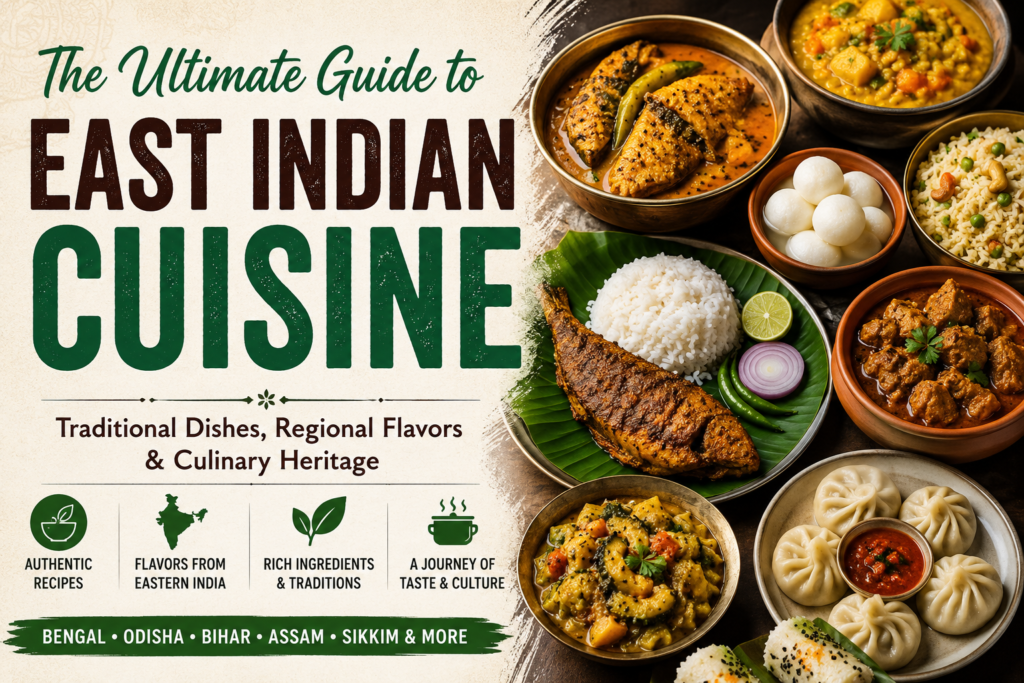
The Ultimate Guide to East Indian Cuisine
Discover the rich world of East Indian cuisine, from Bengal’s iconic fish curries to the Himalayan flavors of Sikkim. Explore traditional dishes, ingredients, cooking techniques, and the diverse culinary heritage of Eastern India.
The Ultimate Guide to East Indian Cuisine: Traditional Dishes, Regional Flavors & Culinary Heritage
India’s culinary landscape is incredibly diverse, and East Indian cuisine stands out for its vibrant flavors, regional diversity, and deep-rooted traditions. Stretching from the fertile plains of the Ganges to the lush hills of the Northeast and the Bay of Bengal coastline, Eastern India offers a remarkable variety of dishes that reflect centuries of history, culture, and local ingredients.
East Indian cuisine encompasses the traditional foods of West Bengal, Odisha, Bihar, Jharkhand, Assam, Sikkim, Arunachal Pradesh, Nagaland, Manipur, Mizoram, Meghalaya, and Tripura. While each state has its own unique culinary identity, they share a love for fresh ingredients, aromatic spices, rice-based meals, seasonal vegetables, and time-honored cooking techniques.
Whether you’re a food enthusiast, a home cook, or someone eager to explore India’s regional cuisines, this guide introduces everything you need to know about East Indian cuisine.
What Makes East Indian Cuisine Unique?
Unlike many other Indian regional cuisines that emphasize rich gravies and bold spice blends, East Indian cuisine often focuses on balancing natural flavors with simple yet effective seasonings.
Some defining characteristics include:
- Rice as the primary staple food
- Freshwater fish and seafood in coastal and river regions
- Mustard oil as the preferred cooking medium
- Panch Phoron (a five-spice blend) for aromatic tempering
- Seasonal vegetables and leafy greens
- Fermented foods in several Northeastern states
- Fresh herbs, bamboo shoots, and local ingredients
- Delicious milk-based and cottage cheese desserts
The result is a cuisine that is flavorful without being overwhelmingly spicy.
The States That Shape East Indian Cuisine
West Bengal
West Bengal is renowned for its refined culinary traditions. Fish is considered an essential part of everyday meals, while sweets are celebrated worldwide.
Popular dishes include:
- Macher Jhol
- Shorshe Ilish
- Kosha Mangsho
- Luchi with Aloor Dom
- Cholar Dal
- Mishti Doi
- Sandesh
- Rasgulla
Odisha
Odia cuisine emphasizes wholesome ingredients and balanced flavors. Many traditional recipes are associated with temples and festivals.
Famous dishes include:
- Dalma
- Pakhala Bhata
- Santula
- Kanika
- Chhena Poda
- Chhena Gaja
Bihar
Bihari cuisine is hearty, rustic, and packed with nutrition. Roasted grains, lentils, and locally grown vegetables play an important role.
Must-try dishes include:
- Litti Chokha
- Sattu Paratha
- Bihari Mutton Curry
- Khaja
- Thekua
Jharkhand
Jharkhand’s cuisine reflects tribal traditions and makes excellent use of forest produce, grains, mushrooms, and leafy vegetables.
Popular foods include:
- Dhuska
- Rugra Mushroom Curry
- Chilka Roti
- Handia
- Bamboo Shoot Preparations
Assam
Assamese cuisine celebrates fresh herbs, fish, duck, rice, and distinctive alkaline preparations.
Signature dishes include:
- Masor Tenga
- Khar
- Duck Curry
- Joha Rice
- Til Pitha
- Payokh
Sikkim
Influenced by Tibetan, Nepalese, and Himalayan food cultures, Sikkimese cuisine is comforting and flavorful.
Popular dishes include:
- Momos
- Thukpa
- Phagshapa
- Gundruk Soup
- Sel Roti
Northeastern States
The cuisines of Arunachal Pradesh, Nagaland, Manipur, Mizoram, Meghalaya, and Tripura are known for smoked meats, fermented ingredients, bamboo shoots, herbs, and minimal use of oil.
Common specialties include:
- Smoked Pork
- Bamboo Shoot Curry
- Black Sesame Dishes
- Sticky Rice
- Fermented Soybean Preparations
- Traditional Herbal Soups
Essential Ingredients Used in East Indian Cuisine
Several ingredients define the authentic flavors of Eastern India.
Staples
- Rice
- Lentils
- Wheat flour
- Rice flour
Cooking Oils
- Mustard oil
- Ghee
- Sesame oil (regional)
Common Spices
- Panch Phoron
- Turmeric
- Cumin
- Coriander
- Mustard seeds
- Fenugreek
- Nigella seeds
- Fennel seeds
- Bay leaves
- Dry red chilies
Fresh Ingredients
- Coconut
- Banana flower
- Bottle gourd
- Pumpkin
- Bamboo shoots
- Spinach
- Fresh fish
- Prawns
- Duck
- Chicken
- Seasonal vegetables
Traditional Cooking Techniques
East Indian cuisine employs several classic cooking methods.
- Slow simmering
- Steaming
- Roasting
- Mustard paste cooking
- Smoking
- Fermentation
- Clay-pot cooking
- Banana leaf wrapping
These techniques preserve the natural flavors of ingredients while enhancing their aroma.
Popular Vegetarian Dishes
Vegetarian cuisine plays an important role in Eastern India.
Some favorites include:
- Dalma
- Shukto
- Santula
- Cholar Dal
- Aloo Posto
- Mixed Vegetable Ghonto
- Pumpkin Curry
- Khar
- Sattu Recipes
Many of these dishes are naturally nutritious and rich in fiber.
Famous Fish and Seafood Dishes
Eastern India is especially famous for its seafood.
Popular recipes include:
- Macher Jhol
- Shorshe Ilish
- Fish Paturi
- Rui Kalia
- Chingri Malai Curry
- Masor Tenga
- Mustard Fish Curry
- Crab Curry
Fresh river fish remains one of the defining features of the region’s cuisine.
Traditional Meat Dishes
Although fish dominates many eastern kitchens, meat dishes are equally beloved.
Popular options include:
- Kosha Mangsho
- Assamese Duck Curry
- Pork with Bamboo Shoot
- Smoked Pork
- Bihari Mutton Curry
- Chicken Curry Bengali Style
- Phagshapa
Many tribal communities prepare meat using smoking and fermentation methods that create unique flavors.
East Indian Street Food
The streets of Eastern India are filled with delicious snacks.
Some must-try foods include:
- Kolkata Kathi Roll
- Ghugni
- Jhal Muri
- Singara
- Aloo Kabli
- Vegetable Momos
- Chicken Momos
- Thukpa
- Dhuska
These dishes are affordable, flavorful, and loved by locals and tourists alike.
Traditional Sweets
Eastern India is often called the land of sweets.
Popular desserts include:
- Rasgulla
- Sandesh
- Mishti Doi
- Chhena Poda
- Pantua
- Cham Cham
- Khaja
- Thekua
- Pitha
- Payesh
Most desserts are made using milk, cottage cheese, jaggery, or rice.
Festival Foods
Food plays an important role during festivals throughout Eastern India.
Popular festival specialties include:
- Khichuri during Durga Puja
- Pitha during Bihu
- Chhena-based sweets during Rath Yatra
- Thekua during Chhath Puja
- Traditional rice dishes during tribal celebrations
Every festival showcases the region’s rich culinary heritage.
Health Benefits of East Indian Cuisine
Many traditional recipes offer impressive nutritional value.
Benefits include:
- High fiber from vegetables and lentils
- Protein from fish, dairy, and legumes
- Healthy fats from mustard oil
- Rich antioxidants from herbs and spices
- Fermented foods that support gut health
- Seasonal ingredients that provide essential vitamins and minerals
When prepared traditionally, East Indian meals are both satisfying and balanced.
Tips for Cooking East Indian Food at Home
- Use authentic mustard oil for traditional flavor.
- Freshly grind spices whenever possible.
- Cook fish gently to preserve its texture.
- Use seasonal vegetables for the best taste.
- Don’t overuse heavy spices—let the natural ingredients shine.
- Experiment with regional recipes to discover unique flavors.
Frequently Asked Questions
What is East Indian cuisine?
East Indian cuisine refers to the traditional foods of Eastern and Northeastern India, featuring rice, fish, lentils, vegetables, mustard oil, and regional spices.
Is East Indian food spicy?
Most dishes are moderately spiced and focus on balanced flavors rather than intense heat.
Which state is famous for sweets?
West Bengal is especially famous for sweets such as Rasgulla, Sandesh, and Mishti Doi, while Odisha is known for Chhena Poda.
What is the staple food of Eastern India?
Rice is the staple food across most eastern states and is commonly served with fish, lentils, vegetables, or meat.
Is East Indian cuisine healthy?
Yes. Traditional East Indian meals often include fresh vegetables, lean proteins, whole grains, and fermented foods, making them nutritious and well-balanced.
East Indian cuisine is a celebration of tradition, diversity, and local ingredients. From the mustard-infused fish curries of West Bengal to the comforting lentil dishes of Odisha, the rustic flavors of Bihar, and the smoked delicacies of the Northeast, every region contributes something unique to India’s culinary heritage.
Whether you’re recreating these dishes in your kitchen or exploring them during your travels, East Indian cuisine offers an unforgettable journey through one of India’s richest and most flavorful food traditions. With its emphasis on fresh ingredients, balanced cooking techniques, and authentic regional recipes, it continues to captivate food lovers around the world.