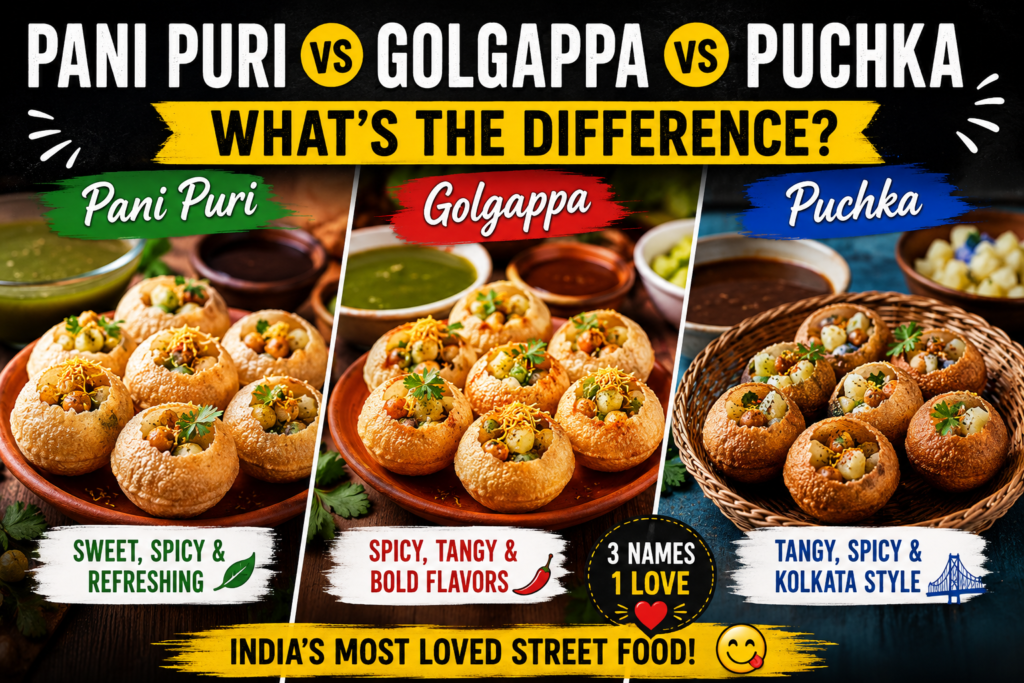
Pani Puri vs Golgappa vs Puchka: What’s the Difference?
Few Indian street foods spark as much excitement as a plate of crispy, tangy, and flavorful pani puri. However, depending on where you are in India, this beloved snack goes by different names—Pani Puri, Golgappa, or Puchka. While many people think they’re exactly the same, each version has its own unique ingredients, flavors, and traditions.
From the spicy streets of Mumbai to the bustling markets of Delhi and the iconic food stalls of Kolkata, every region has added its own twist to this timeless snack.
Let’s explore the fascinating differences between Pani Puri, Golgappa, and Puchka.
What Is Pani Puri?
Pani Puri is one of India’s most popular street foods, especially in Maharashtra, Gujarat, Karnataka, and parts of Central India.
It consists of crispy hollow puris filled with:
- Boiled potatoes
- Boiled chickpeas or white peas
- Sweet tamarind chutney
- Spicy mint-coriander water
- Sev (optional)
- Fresh coriander
The pani is usually refreshing with a balance of spicy, tangy, sweet, and minty flavors.
The experience is all about eating the entire puri in one bite before it becomes soggy.
What Is Golgappa?
Golgappa is the North Indian version commonly found in Delhi, Punjab, Haryana, Uttar Pradesh, Rajasthan, and nearby states.
Unlike Pani Puri, Golgappa focuses much more on bold, spicy, and tangy flavors.
Typical filling includes:
- Boiled potatoes
- Chickpeas
- Sometimes sprouts
The water often contains:
- Mint
- Coriander
- Green chilies
- Black salt
- Roasted cumin
- Tamarind
- Asafoetida (hing)
Many vendors also serve two different waters:
- Spicy mint water
- Sweet tamarind water
One interesting feature of Golgappa is the larger puri, making it slightly bigger than regular Pani Puri.
What Is Puchka?
Puchka is the pride of West Bengal, especially Kolkata, and is also popular in Bangladesh.
Many food lovers believe Puchka has the boldest flavor among all three versions.
Instead of plain potato filling, Puchka typically uses:
- Boiled potatoes
- Black chickpeas
- Roasted spices
- Tamarind pulp
- Green chilies
- Black salt
- Coriander
The water is much tangier and less sweet than Pani Puri.
The puris themselves are usually darker, crispier, and made with a higher proportion of whole wheat flour, giving them a unique texture.
Major Differences at a Glance
| Feature | Pani Puri | Golgappa | Puchka |
|---|---|---|---|
| Popular Region | Maharashtra, Gujarat | Delhi, North India | West Bengal |
| Taste | Sweet, spicy, tangy | Spicy and tangy | Tangy, spicy, bold |
| Filling | Potato + chickpeas | Potato + chickpeas | Potato + black chickpeas |
| Water | Mint, sweet & spicy | Mint, hing, tamarind | Tamarind-heavy and spicy |
| Puri | Light & crispy | Slightly larger | Darker & crispier |
| Sweet Chutney | Common | Optional | Rare |
Regional Names Across India
India has many names for this beloved snack.
| State | Name |
|---|---|
| Maharashtra | Pani Puri |
| Gujarat | Pani Puri |
| Karnataka | Pani Puri |
| Delhi | Golgappa |
| Punjab | Golgappa |
| Haryana | Golgappa |
| Uttar Pradesh | Golgappa |
| Rajasthan | Golgappa |
| West Bengal | Puchka |
| Bihar | Phulki |
| Odisha | Gupchup |
| Chhattisgarh | Gupchup |
| Telangana | Pani Puri |
| Andhra Pradesh | Pani Puri |
Which Version Is the Spiciest?
Most food lovers agree that Puchka delivers the strongest spicy and tangy punch thanks to its generous use of tamarind, roasted spices, and green chilies.
Golgappa comes a close second with its bold mint water and hing-infused flavor.
Pani Puri is generally milder because it balances spicy water with sweet tamarind chutney.
Which Puri Is the Crispiest?
Many Kolkata street vendors prepare Puchka puris using a blend of whole wheat flour and semolina.
This creates:
- Extra crunch
- Richer flavor
- Better texture
Pani Puri and Golgappa usually use lighter semolina-based puris.
Why Does Every Region Have a Different Recipe?
Indian cuisine changes dramatically from one region to another.
Several factors influence local variations:
- Climate
- Local spices
- Traditional cooking styles
- Availability of ingredients
- Cultural preferences
Western India enjoys sweeter flavors.
Northern India prefers bold spices.
Eastern India loves tangy tamarind and roasted spice blends.
These regional influences have shaped today’s unique versions.
Can You Make All Three at Home?
Absolutely!
Prepare one batch of crispy puris and create different fillings and flavored waters.
For Pani Puri:
- Sweet tamarind chutney
- Potato filling
- Mint water
For Golgappa:
- Potato and chickpea filling
- Spicy hing water
For Puchka:
- Potato and black chickpea filling
- Tamarind-rich spicy water
Hosting a tasting party with all three varieties is a fun way to discover your favorite.
Which One Is the Most Popular?
Each version has a loyal fan base.
- Pani Puri dominates western India.
- Golgappa is a favorite across northern India.
- Puchka enjoys iconic status in Kolkata and West Bengal.
Thanks to social media and food festivals, all three have gained popularity across India and around the world.
Tips for Enjoying the Perfect Street-Style Experience
- Eat each puri immediately after it’s filled.
- Use fresh mint and coriander for flavorful water.
- Keep puris airtight to maintain crispiness.
- Chill the flavored water before serving.
- Adjust spice levels to suit your taste.
Frequently Asked Questions (FAQs)
Is Pani Puri the same as Golgappa?
They share the same concept but differ in flavors, fillings, and regional preparation styles.
Why is it called Puchka?
The name is believed to come from the sound made when the crisp puri cracks (“puch”) as you bite into it.
Which version is healthier?
Homemade versions of all three can be healthier by using fresh ingredients, baked puris (if preferred), and controlled amounts of salt and chutney.
Can I make the water ahead of time?
Yes. The flavored water tastes even better after chilling for a few hours, allowing the spices to blend.
Whether you call it Pani Puri, Golgappa, or Puchka, this iconic Indian street food is a celebration of flavor, texture, and regional culinary traditions. Each version reflects the tastes of its region—from the sweet-and-spicy balance of Mumbai-style Pani Puri to the bold punch of Delhi’s Golgappa and the tangy intensity of Kolkata’s Puchka.
The best way to settle the debate is simple: try all three and decide which one wins your heart!